
Finding Burbank Residents
A good Burbank resident lookup matches the record to the question. An address points to the Los Angeles County Assessor and the Burbank parcel map. It also points to the city permit system first. A name can lead somewhere else entirely. Court party searches and business filings answer different pieces of the puzzle. Professional licenses and obituaries answer other pieces. A past address calls for a reverse directory, a census household, or a deed trail. None of these is a full list of people. Keep each source's purpose in view and the search stays honest.
Proof belongs to the official custodian. The Assessor can establish a parcel, its AIN, the legal description, and a tax mailing clue. But it never shows every person on the site. The county voter status form checks one person's own registration. It will not browse a block. A directory entry may name a householder and skip the rest of the household. Those limits make cross-checking smarter than trusting a single hit.
- Write down the name, spelling variants, middle initial, address, and likely time period.
- Use the Assessor Portal or Burbank map to turn an address into an AIN and legal description.
- Check the relevant court, vital, business, license, or obituary source for a second identity clue.
- Use the recorder's name-and-year index in Norwalk when a deed or other recorded instrument matters.
- Move to library directories, newspapers, census material, or a focused CPRA request when the online path ends.
Where Burbank Resident Records Live
Burbank's records map has four sides. The City Clerk at 275 E. Olive Avenue holds municipal records and handles ordinary California Public Records Act requests. Los Angeles County RR/CC keeps deeds, vital records, marriages, and election filings. The Assessor supplies parcel facts. The Superior Court maintains civil, criminal, family, probate, and small-claims cases. The Burbank Public Library adds the local-history layer that government indexes skip entirely.
These offices do not share one Burbank residents directory. The city records people who touch municipal work, permits, filings, or meetings. The county recorder indexes parties to instruments, not households. The court portal describes cases, not lives. Use each office for the fact it actually keeps and a resident lookup gets stronger.
Los Angeles County RR/CC
Real estate, vital, marriage, and election records
Norwalk and county service channels
(800) 201-8999
County Clerk and Recorder services
Los Angeles County Assessor
AIN, situs, legal, value, and parcel facts
Address or AIN web search
County portal support
Assessor Portal
Burbank City Clerk
Municipal records and CPRA routing
275 E. Olive Avenue, Burbank CA 91502
(818) 238-5851
City records portal
Burbank Resident Name-to-Address Trail
A person search works best as a chain. Start with the name in California Secretary of State bizfile. That applies if a company, nonprofit, or trade name might be involved. DCA's license search can show a license status or public discipline. Some boards run separate systems, though. For property clues, move from a known address to the Assessor's AIN. The public Assessor Portal offers Basic Search by AIN or address, Legal Search, and Map Search. It offers no general owner-name box.
Treat business and license records as affiliation clues, not residence proof. A filed agent, officer, contractor, or permit applicant connects to an organization or project. That is not necessarily a home. The California Controller's unclaimed-property search adds a free name-plus-city or name-plus-ZIP lead. Reported addresses can be stale, and a claim requires identity documents. Compare the date, the role, and the city. Also compare at least one other record before merging two people who share a name.
Useful bridge. Keep the AIN, case number, instrument number, or license number; those identifiers make a later custodian request far more precise.
Burbank Property Records Start With AIN
The Burbank Property Information Portal accepts an address, APN, or permit number. Its permit trail shows work done and inspection milestones. It also lists certificates of occupancy. It names applicants, architects, contractors, or owners. Building & Safety serves the public at 150 N. Third Street, first floor, at (818) 238-5220. The counter runs Monday through Thursday from 8 to 3:30. Friday hours are 8 to 3. Lunch closure runs noon to 1. Remember that a permit party is not automatically the occupant of the parcel.
The city map and the county parcel record answer different questions. Open the Burbank planning and zoning page for the citywide mapping entry point. The parcel layer then shows the lot's shape, situs, zoning, and neighboring parcels. The underlying service exposes AIN and APN. It also carries situs address, mailing address and ZIP fields. Zoning code, land year, and geometry round out the fields. Its 50,000-record service setting means a map view is not a full resident export.
| Basic Search | One address or AIN text/autocomplete field; a query is needed for results. |
|---|---|
| Legal Search | Legal-description routes; the exact dynamic labels should be checked in the live portal. |
| Map Search | Pan to a parcel and select it from the map. |
| Property Portal | Address, APN, or permit number search for Burbank permit records. |
Start with the physical situs address. Save the AIN. Then compare the tax mailing field against the legal parcel. Situs means the land's physical location. Mailing address means where tax notices go. Neither field alone proves who lives there.
For municipal records, open the Burbank public records portal. It is a starting point for city documents, not a people list.
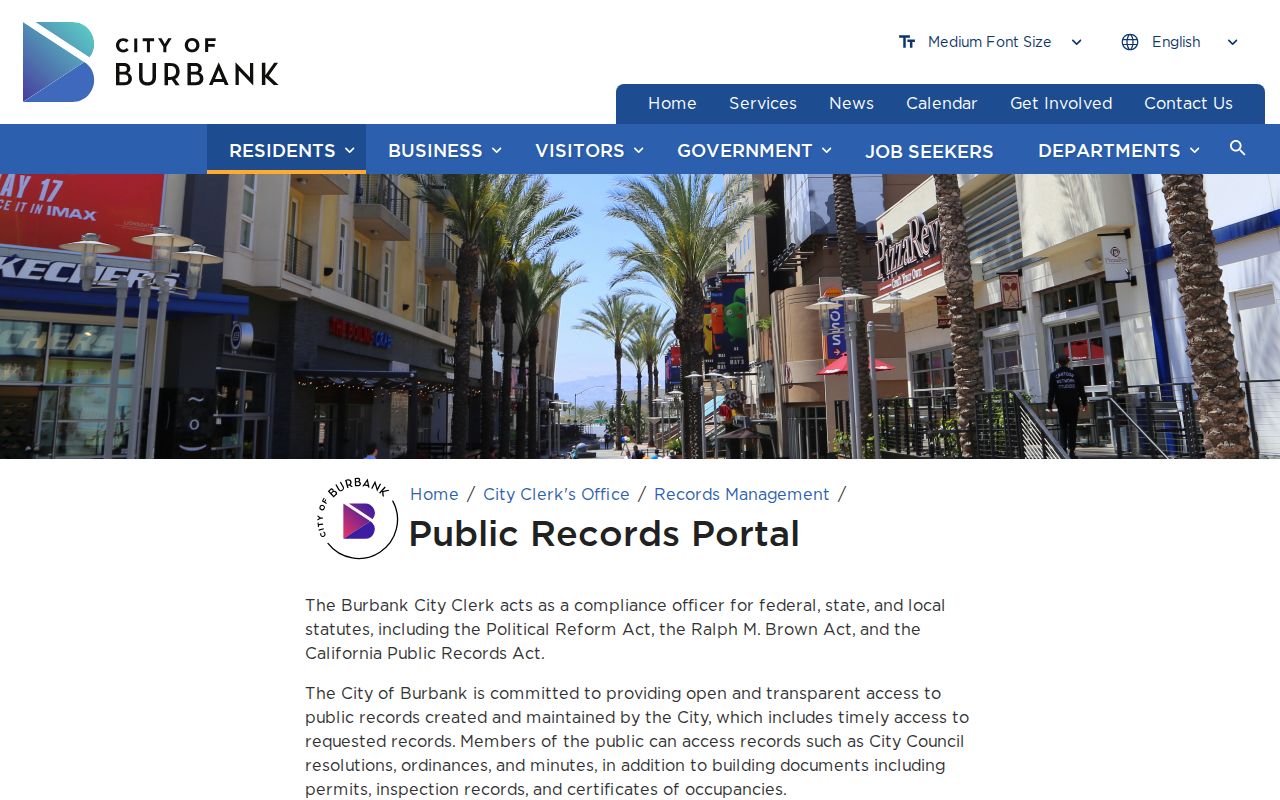
The Burbank public records portal also holds ordinances, resolutions, minutes, and building documents. It was restored on March 10, 2026 after an outage. Keep permit or document numbers handy in case the online route shifts again.
Burbank Voter Records: Four Checks
Start with the LA County Voter Registration Status tool, but know what it is. This is a self-check rather than a public Burbank residents directory. You must supply a last name, birthdate, house number, and ZIP Code. A matching entry confirms the combination. It returns the registrant's own status and election details. No name-only search exists there. The tool also offers no street-by-street scan.
| Field | Type | Required | Format |
|---|---|---|---|
| Last Name | Text | Yes | Alphabetic only |
| Birthdate | Date or text | Yes | mm/dd/yyyy |
| House Number | Text | Yes | Numbers only, residence address |
| Zip Code | Text | Yes | Numbers only |
Questions go to Los Angeles County at (800) 815-2666, option 2. The law protects a voter's street address. It also shields phone, email, identifiers, prior-registration information, and signature. Those protections come from Government Code §§7924.000-7924.005 and Elections Code §2194. Voter history reveals which elections a person took part in, never ballot choices. Approved election, scholarly, journalistic, political, and governmental uses follow a separate application and fee path.
Burbank Resident Directories Today
Current sources resemble a Burbank residents directory only when their scope is stated plainly. The property roll is parcel based. The voter tool is self-only. City permits name project parties. Business filings identify an entity and its filed contacts. A local-history request can surface an obituary or a community event, which rounds out the picture. Treat each row as a lead, not a claim that every resident appears.
| Source | Who May Appear | Keeper | Access |
|---|---|---|---|
| Assessment parcel | Assessed owner and tax-mail clue | Los Angeles County Assessor | Free address/AIN portal |
| Permit record | Applicants, contractors, and project parties | Burbank Building & Safety | Portal or counter |
| Recorded instrument | Grantors and grantees | LA County RR/CC | Norwalk index and copies |
| Voter status | One registrant's own status | LA County Registrar-Recorder | Four-factor self-check |
| Entity or license filing | Officers, agents, licensees | California SOS or DCA | Free search, limits vary |
The right first source depends on the clue you hold. Pick the parcel path for a street. Pick the court or vital path for one person. The historical shelf serves a past household. The address-led workflow is expanded on the Burbank street directory page, while the one-person sequence belongs on the Burbank resident lookup page.
Burbank Deed Records Need a Norwalk Visit
Los Angeles County deliberately keeps its real-estate index off the internet. That is the key Burbank records quirk. It sits behind Government Code §7928.205 and the county's address-protection policy. Deeds run from 1851 to the present. The index sits at Norwalk, alphabetical by grantor, grantee, and year. It is not keyed by street address. The bridge works like this: address to AIN, AIN to current owner. Then owner to a name-and-year index search.
A recorded instrument can show grantor, grantee, document type, recording year, instrument number, and book or page where applicable. It can also show legal description, recording stamp, return address, signatures, notary acknowledgment, and transfer-tax statement. The image is a complete document, not a hand-picked fact. To work backward, search the seller as a grantee in earlier years. Search trust, business, spouse, and spelling variants when the title form calls for them.
At 12400 Imperial Highway, Norwalk CA 90650, the lower level handles 1851-1957 review. The second floor handles 1958-present. Telephone staff at (800) 201-8999 explain procedure. RR/CC does not accept phone index searches. A known instrument can be ordered online, by mail, fax, or at the counter. The published online estimate is within 20 working days, with fees checked at order time.
For the court-case capture, open the LA Superior Court Find a Case service. The image below is the matching Burbank records page.
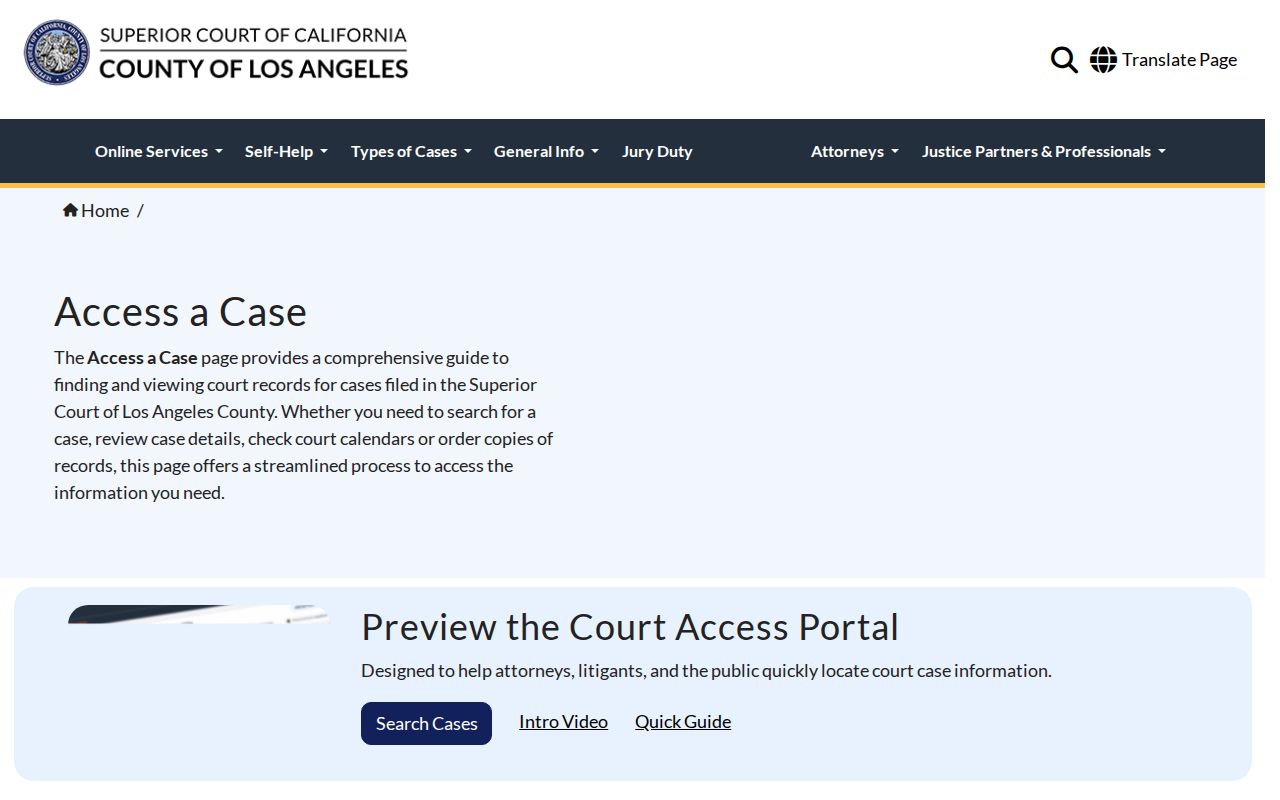
Courthouse and library fallbacks matter when Norwalk is not convenient. Use the free office terminals. Ask the library for a directory bridge. Consult county clerk services for the right filing channel. A records request cannot make the county conduct a custom address-to-person search.
Burbank Court Records Without a Case
Every Burbank state trial case sits with one court. That is the Superior Court of California, County of Los Angeles. The LA Superior Court Find a Case service offers free case-number and calendar access. Civil, family, and probate party-name searches run through a paid linked service. So do criminal defendant-name searches. Guest or account access applies. Case images vary by case type and may carry a fee. Criminal and family images are not offered through the general image service.
A case-number result can show the court, case number, and title. It may also list the filing date, case type, and status. Party roles and hearing dates can appear too. So can the register of actions and document entries. A docket is the running record of filings and court events. It is not the full certified case file. Sealed and confidential records stay restricted. An allegation in a docket is not an adjudicated fact.
Older county files move through the Archives and Records Center at 222 N. Hill Street, Room 212, Los Angeles. The ARC lists Monday-Friday hours of 8:30-4:30 and the phone number (213) 830-0198. It mainly stores unlimited civil, family, felony, probate, and juvenile files from 1910-2004. Public computers may show images that are not remote. Paper, microfilm, and digital copies have separate access rules. The Los Angeles County Clerk service page is the source for the county-office capture below.
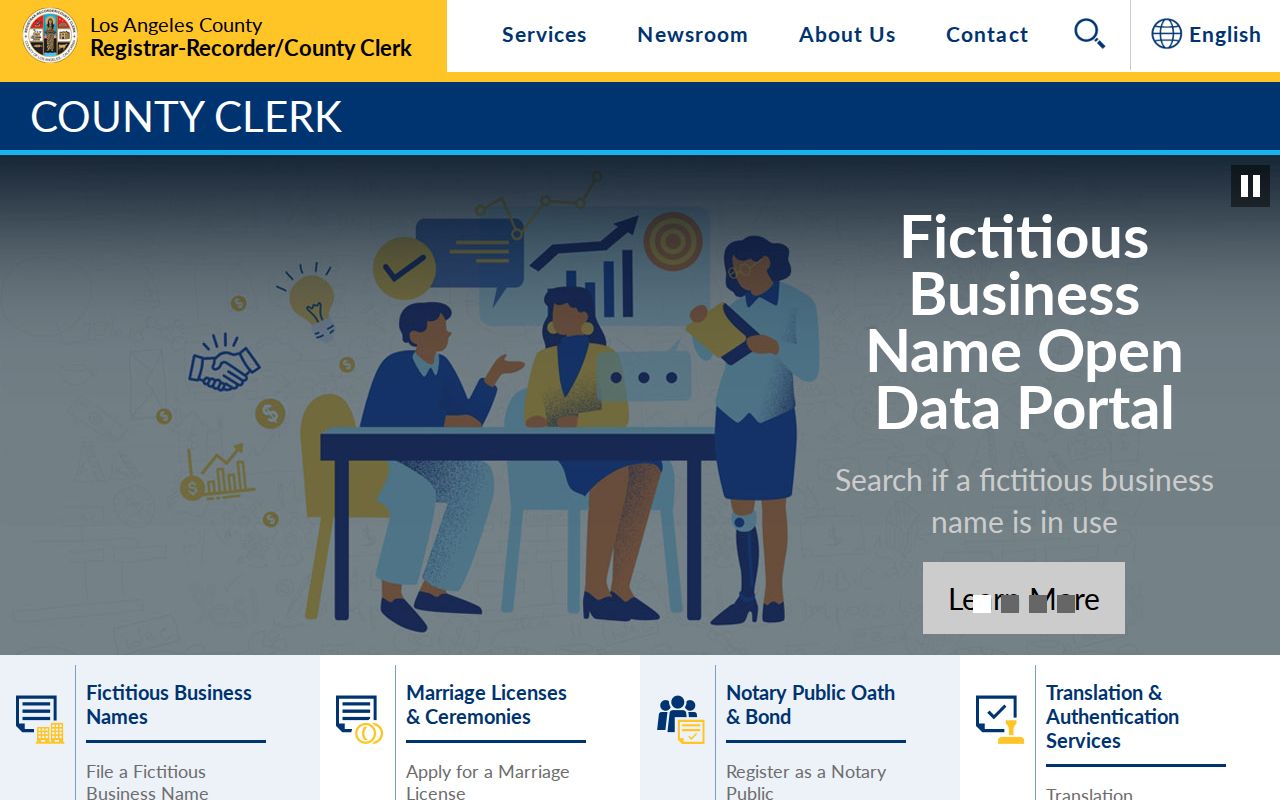
The county clerk image belongs to the county office map, not the court archive. For a probate heir question, compare the petition, notices, inventory, deeds, and obituary trail. Never merge a same-name party without a date, address, role, or other independent identifier.
Burbank Resident Obituaries at the Library
Modern search engines lose people, but the Burbank Public Library local-history service recovers them the old way. Staff search newspaper microfilm for former Burbank residents. The catch is simple. They need an exact death date, and they will scan ten days of film around it.
Two local papers anchor the collection. The Burbank Daily Review runs 1931-1985, and the Burbank Leader runs 1985-2008. Beyond those, staff can check the historic Los Angeles Times database from 1881-1987 plus the current database the library lists. Requests go to burbankhistory@burbankca.gov.
A surname alone travels badly. Give staff a date, a place, a spouse, a street, an organization, or a likely event window instead. A good obituary can name relatives, a service, a workplace, or a former address. It is still not a death certificate. Confirm the key fact through RR/CC, CDPH, probate, or the court custodian before you rely on it.
For family history, stack the sources. Pair the obituary with the county death copy rules, a cemetery or funeral notice, a directory year, and a deed or probate entry. Because the library's service is a human search of unindexed film, the exact date is the practical key. That small access detail makes the obituary one of the most useful stops on the Burbank residents directory trail.
See the Burbank Library local-history research page for the request method and collection notes. For a specific municipal record, the Burbank City Clerk public-records request page is the right channel. Use it for an identifiable document, not a broad search about a person.
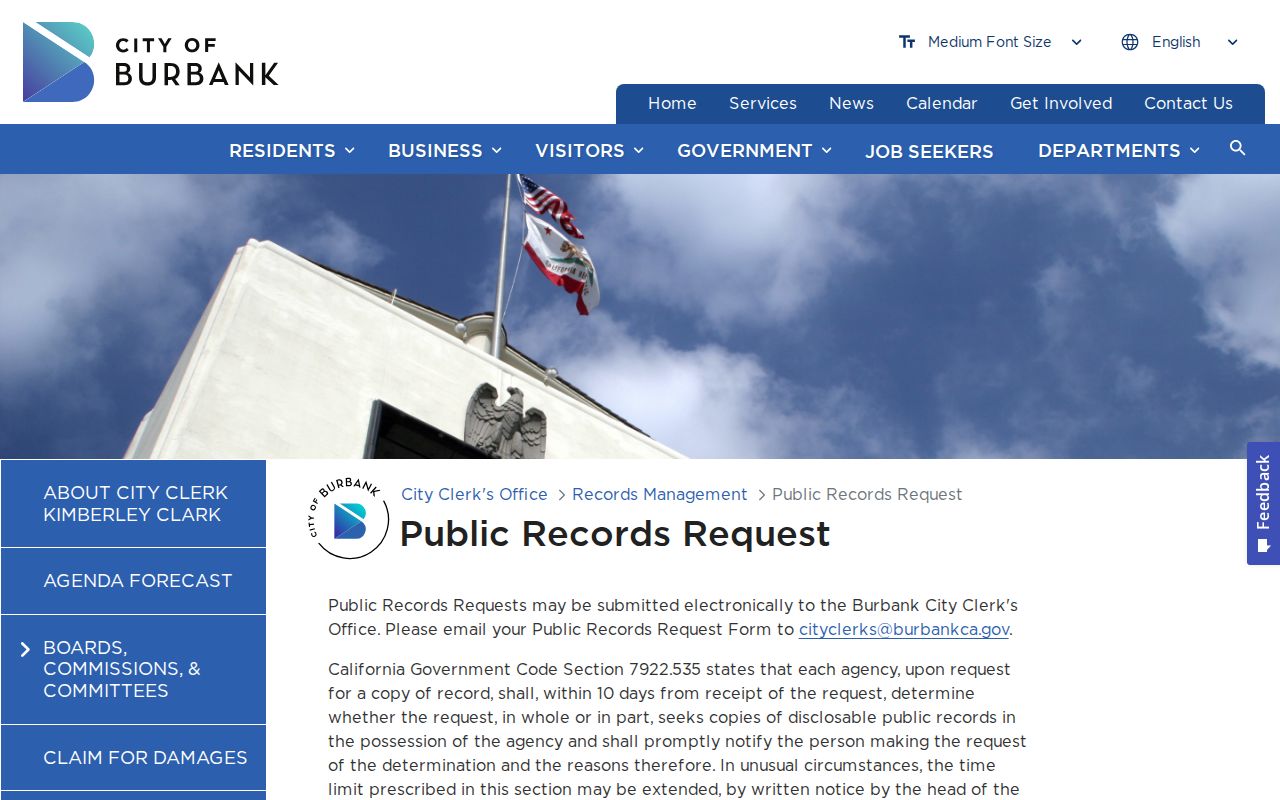
A focused request gets results. A custodian can search a defined record or a narrow date range, but a sweeping request about a person substitutes for nothing. Precision is what turns the city's public-records process into a working tool.
Burbank Vital Records Copy Types
California does not use one simple closure period. Instead, it sorts vital copies into eligibility-based types. For Burbank births, deaths, and marriages, Los Angeles County RR/CC is usually the faster route.
CDPH holds the statewide records. Mailed applications go to CDPH-Vital Records, MS-5103, PO Box 997410, Sacramento CA 95899-7410. The office runs no public counter. It will not email or fax images either.
| Birth | 2026 fee $31; authorized copies follow Health and Safety Code §§103525-103526, while informational copies are marked not valid to establish identity. |
|---|---|
| Death | 2026 fee $26; informational copies are available to others, with signatures and Social Security numbers redacted. |
| Public marriage | 2026 fee $19; public and confidential marriage records use different county rules. |
| Confidential marriage | County Clerk access is limited to a party or court order under Family Code §509. |
| Divorce | The decree comes from Superior Court; a CDPH dissolution certificate is not the filed judgment. |
The application asks for plenty of detail. Expect the certificate type, registrant or spouse names, event date and place, applicant contact details, relationship, number of copies, and a signature. Authorized applicants must select a qualifying relationship or legal category. Mailed requests normally require a notarized sworn statement. Make checks or money orders payable to CDPH Vital Records. If the search produces a Certificate of No Public Record, the fee is still retained. CDPH public information is (916) 558-1784.
Historical Burbank Resident Directories
Historical coverage reaches well beyond any modern Burbank residents directory. The Los Angeles Public Library has digitized Los Angeles-area city and street-address directories spanning 1875-1987, searchable by name or address. Its historic city and business directories run from 1873-1970, and the hard-copy Los Angeles set covers 1873-1942. Reverse volumes exist for 1906, 1927, and 1956-1987. One caution applies: a Los Angeles title does not guarantee every county community appears, so check each volume for Burbank coverage.
LAPL also describes more than 5,000 rolls of U.S. city-directory microfilm from 1861-1960, roughly 52,000 genealogy titles, and about 1,000 hard-copy U.S. directories. For photographs and local context, the Burbank Historical Society and Gordon R. Howard Museum are natural referral points. Founded in 1973 and partly housed in the restored 1887 Mentzer House, they anchor local memory. A fuller collection-by-collection reading method appears on the Burbank city directory page.
A single directory entry carries surprising detail. It can show a name, a spouse in parentheses, an occupation, an employer, a street address, a telephone, and an "h" or "r" residence mark. What it shows is a surveyed subscriber or householder, not every member of a household. Pair a directory with census years, deeds, permits, newspapers, and a vital record before treating a move or disappearance as proof of a life event.
For the regional name-and-address run, the LAPL digitized directory collection is the place to start. Small search habits matter. The literal h prefix and numbered-street variants can change the result.
Burbank Business Records and Public Clues
Start with the state's own business index. The California Secretary of State's bizfile Online Business Search accepts an entity name or file number. Advanced filters narrow by entity group, status, initial filing date, and publicly traded disclosure. Results default to the closest 500 matches.
Detail pages can show a lot. Expect entity number and type, formation or registration, status, jurisdiction, street and mailing addresses, service agent, filing due date, and filed officer, director, member, or manager information. Free PDF filings add dated clues. They still do not prove where a person lived.
The state unclaimed-property search is another narrow lead. It requires a last or business name or a Property ID, then allows optional first name, city, and ZIP refinement. A Burbank match can help separate two similar names, but the property report may be old and a claim demands proof. A professional license search can show status, expiration, and public discipline, and some boards use separate systems. Reach for these when the question is an affiliation, not a residence record.
The business-search screen shows the gap between a filed organization record and a household record. It can back up a name match when the organization, date, and role line up. For the privacy counterpart to that business clue, the California DROP deletion service handles removal.
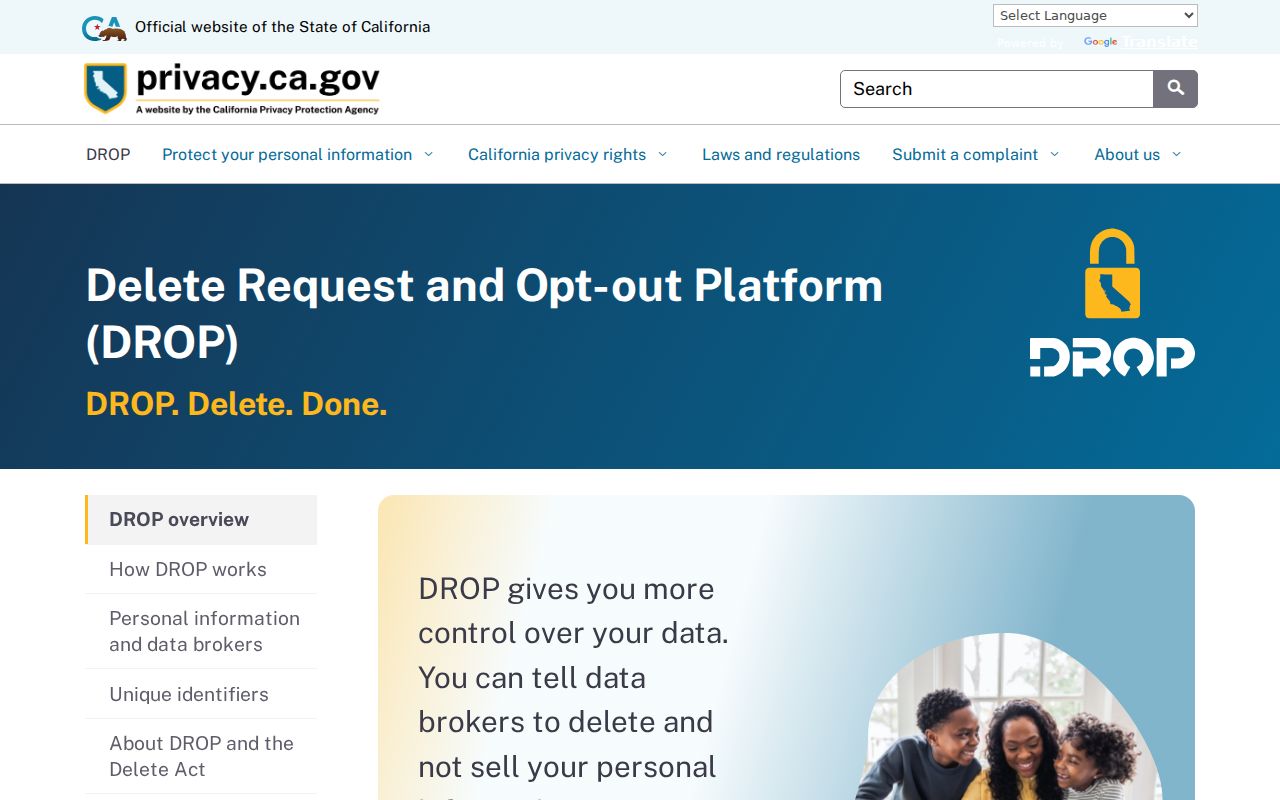
California's DROP service went live in 2026 and handles verified deletion requests aimed at registered data brokers. It covers commercial data only, so deeds, court files, and other lawful government records sit outside its reach. For the official route, see the California DROP information page.
Burbank's 1911 Records Divide
Burbank incorporated in 1911, carried by an 80-51 vote with roughly 500 residents. The elected City Clerk became the city's first full-time paid employee. That date creates a clean search boundary. Before 1911, no "City of Burbank" municipal record series exists. Look instead to Los Angeles County deeds and courts, census geography, regional directories, and newspapers. After incorporation, city decisions and permits add a municipal layer. Land title stays with the county.
The same divide explains a common sight with one modern Burbank address. It can surface a city permit, a county AIN and deed, a county election record, a Superior Court case, and a library newspaper notice. Every item has its own custodian. The 1958 floor division at the recorder marks a physical access cutoff, not a shift in title law. The 2004 ARC boundary is approximate by case type. Keep era labels attached to every note so nothing gets misplaced across that line.
Burbank Records When a Portal Is Down
Burbank's public-records portal came back online March 10, 2026. An outage never erases the record behind it, though. The City Clerk still accepts CPRA requests by email, form, mail, or in person. The form asks for the requester's name, date, daytime phone, email, and mailing address. It also wants a description of the records, a time period, a delivery choice, and department routing. Delivery options run from inspection and pickup to mail, email, and compact disc.
Send city requests to cityclerks@burbankca.gov. The California Public Records Act sits at Government Code §§7920.000-7931.000. Section 7922.535 gives an agency 10 days to decide whether it holds identifiable records. A written unusual-circumstances extension of up to 14 days can follow. That clock measures a determination, not delivery of copies. The 2023 form lists copy charges, though the current citywide fee schedule should control.
Some materials belong at a counter, not a screen. When a map, permit, or public-works sheet needs staff help, Public Works at 150 N. Third Street can help. The counter holds address maps, assessor parcel maps, cadastral and easement sheets, tract and parcel maps, sewer cadastral material, and street plans. Hours are 8 to noon and 1 to 3:30 Monday through Thursday, closing at 3 on Friday. Call (818) 238-3950 or write pwonlinecounter@burbankca.gov. For the request procedure and current routing, use the Burbank City Clerk public-records page. Ask for an identifiable permit, map, resolution, or date range rather than "all information about a person."
Burbank Resident Matches Need Two Sources
A credible Burbank residents directory result is a set of matching facts, never just a familiar name. Save the exact middle initial, suffix, name at birth, party role, recording or filing date, address clue, and source number. Compare at least two independent identifiers before tying a person to a parcel, probate case, obituary, business, or license.
- Roll
- A list kept for a defined purpose, such as assessment or election administration.
- Index
- A finding aid that points to a record; it may show less than the record image.
- Parcel
- A mapped tract of land identified across systems by an AIN or related parcel number.
- Criss-cross directory
- A reverse directory organized by street and house number rather than only by surname.
Lawful use. Burbank public records are for personal, lawful research, family history, civic understanding, and safe reconnection. Do not use a lookup to stalk, harass, threaten, or harm anyone.
When a source is wrong, contact the custodian that created it. The county, court, city, library, or state office can explain its correction or copy process. A reference directory can point you toward the source, but it cannot certify, amend, or erase an official record.